How Many Wheelchairs Fit in One 40ft Container? By Type
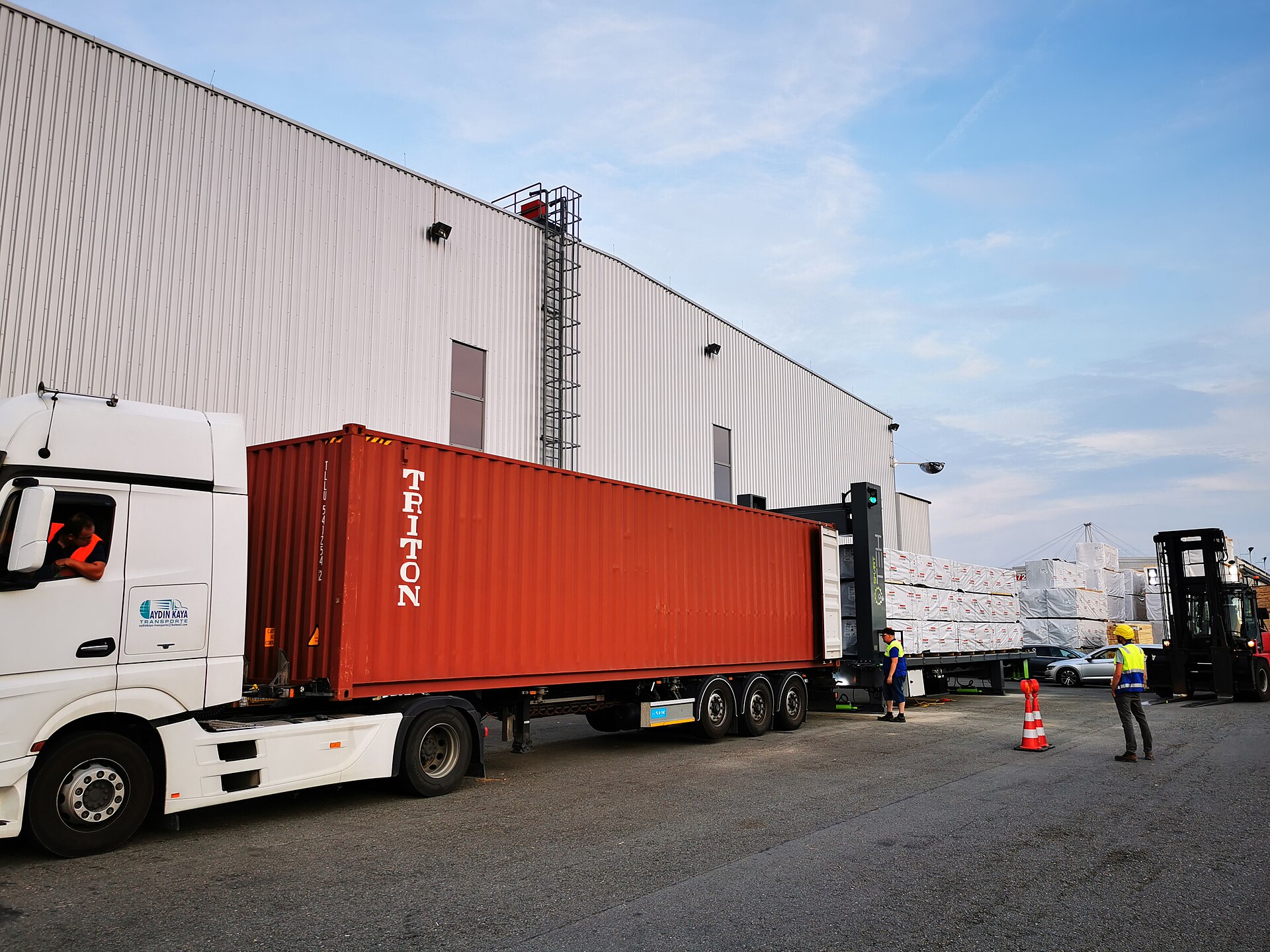
The honest answer to "how many wheelchairs fit in a 40ft container" is: somewhere between 200 and 1,700, depending entirely on which chair you are shipping. Generic guides quote a wide 200-450 range because they average across every chair type ever built. If you are planning a purchase order, you need the number for your model. This article lists real loading figures from our factory floor, carton by carton, for every wheelchair category we build — folding manual, reclining, commode, electric, rollators — plus the carton math you can use to check any supplier's number. All figures are indicative: final counts are calculated per order, because carton sizes, mixed SKUs, and palletizing all shift the total.
First, the Three Container Sizes That Matter
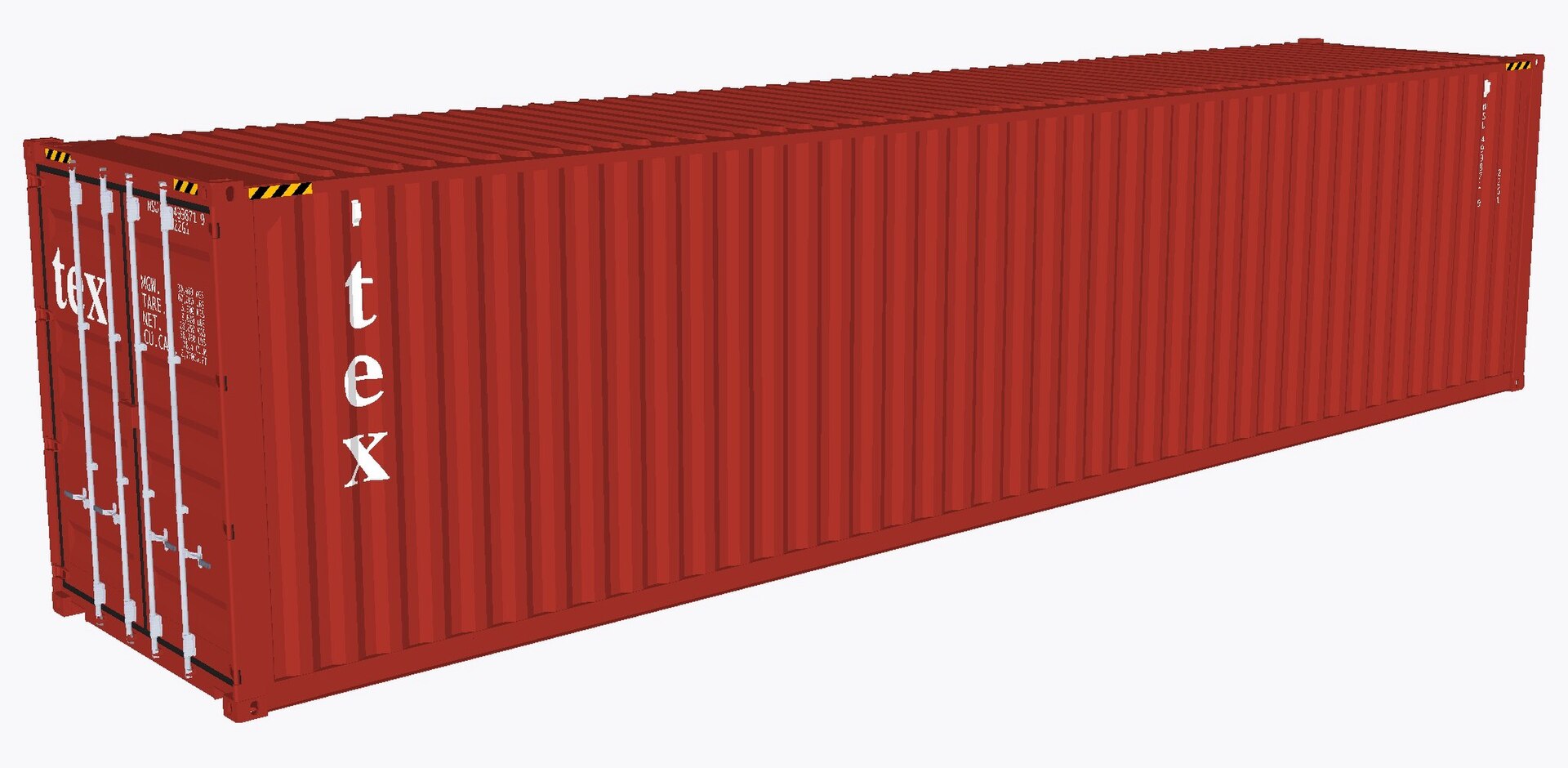
Wheelchair orders almost always move in one of three steel boxes. The interior dimensions:
- 20ft general purpose (20GP): 5.90 × 2.35 × 2.39 m — about 33.2 CBM
- 40ft general purpose (40GP): 12.03 × 2.35 × 2.39 m — about 67.7 CBM
- 40ft high cube (40HQ): 12.03 × 2.35 × 2.70 m — about 76.4 CBM
Payload is rarely the constraint for wheelchairs. A fully loaded box of chairs typically weighs under 9 tonnes against a 40ft payload of roughly 26-28 tonnes (exact limits vary by shipping line and container). Volume is what runs out first — that single fact drives every number below.
Real Loading Numbers by Chair Type (40HQ)
The table lists our published carton sizes and loading figures. Ranges appear where mixed-SKU loads shift the count; every figure is indicative and recalculated per order.
| Wheelchair type | Carton size L×W×H (cm) | Units per carton | Units per 40HQ |
|---|---|---|---|
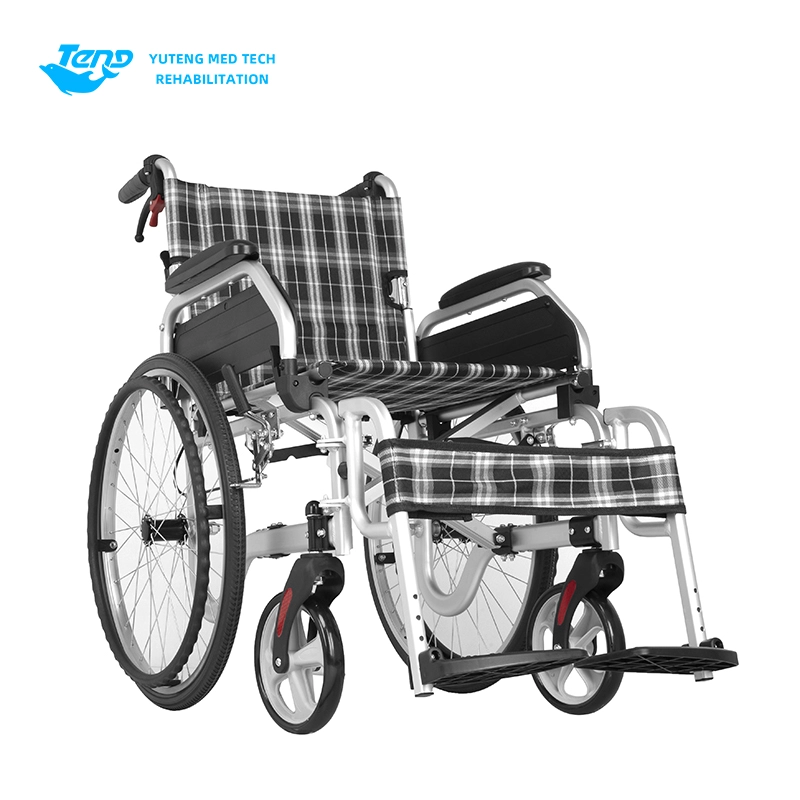
| Folding manual (self-propelled) | 80 × 29 × 75 | 1 | ~300 |
| Lightweight aluminum | 78 × 32 × 95.5 | 1 | ~283 (115 per 20GP) |
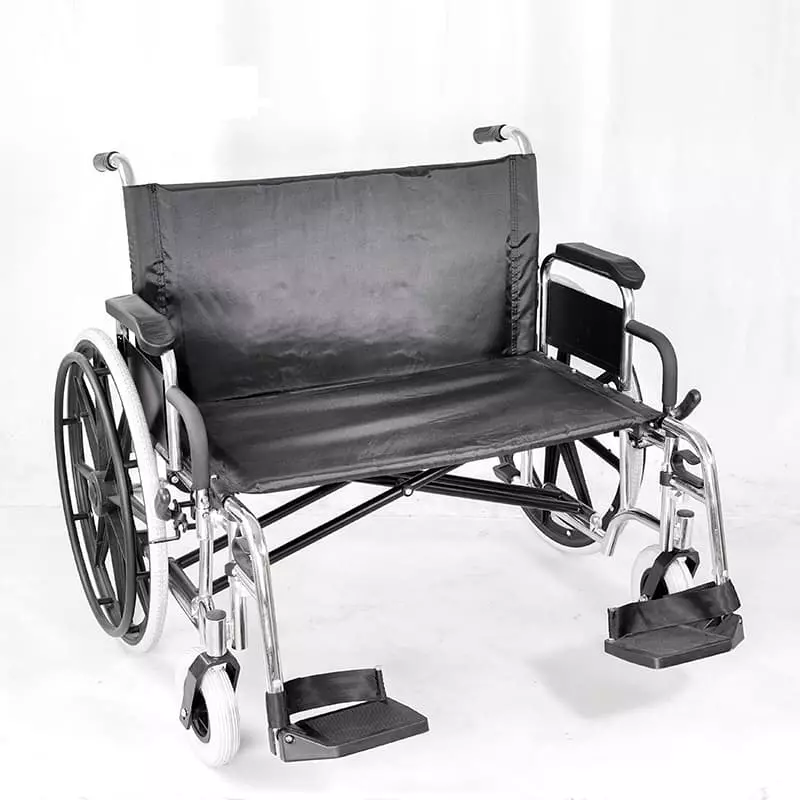
| Bariatric | 85 × 34 × 91 | 1 | 230-260 |
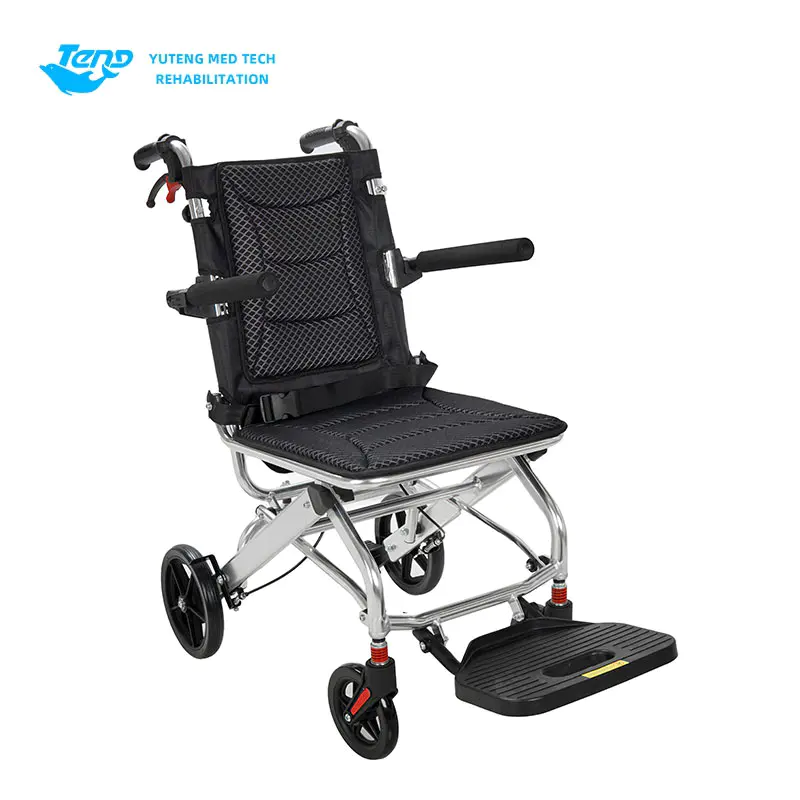
| Lightweight transport chair | 64 × 27.5 × 74.5 | 1 | 460-500 (estimate) |
| Racing / sport | 86 × 34 × 79.5 | 1 | ~288 |
| Recliner wheelchair | 77 × 40 × 95 | 1 | 200-230 |
| High-back wheelchair | 94 × 33 × 92 | 1 | 210-240 |
| Steel commode wheelchair | 92 × 28 × 88 | 1 | 260-295 |
| Power wheelchair | 82 × 61 × 41 | 1 | 290-330 |
| Electric folding wheelchair | 84 × 50 × 51 | 1 | 315 (128 per 20ft) |
| Bedside commode chair | 51 × 19 × 77 | 1 | 800-910 |
| Shower chair | 80 × 22 × 45 | 2 | 1,500-1,700 |
| Rollator with basket | 60 × 20 × 71 | 1 | 700-790 |
| Aluminum rollator with seat | 60 × 54 × 18 | 1 | 1,020-1,160 |
| Standard walker | 57 × 19 × 79 | 2 | ~1,560 |
Read the table as five density bands. A full-size reclining chair with its long frame eats 76.4 CBM fast: 200-240 units. A standard folding manual chair packs smaller: around 300. Commode and shower chairs ship partially flat-packed in slim cartons, so the same box swallows 800-1,700. Rollators and walkers sit between the two worlds — 700-1,160 for rollators, roughly 1,560 walkers. The transport-chair row is the exception: it is derived with the carton formula further down, not from a factory loading record, which is why it carries an estimate tag. For 20ft planning, our two published 20GP figures (115 of 283, 128 of 315) both land at about 41% of the 40HQ count — the raw volume ratio (33.2 of 76.4 CBM) predicts 43%, and floor geometry shaves a little, so use 40-43% as the conversion range.
The Carton Math Behind Every Number
You can reconstruct — and audit — any supplier's loading figure in three steps. The carton size line on a spec sheet is all you need (our guide to reading a wheelchair spec sheet shows where to find it).
- Multiply the carton dimensions in meters. Our bedside commode chair: 0.51 × 0.19 × 0.77 = 0.075 CBM per carton.
- Divide the container volume by the carton volume: 76.4 ÷ 0.075 ≈ 1,019 cartons theoretical.
- Apply 80-85% floor-loading utilization — real loads leave working gaps, corner voids, and a margin against crushing: 1,019 × 0.80-0.85 ≈ 815-866 units.
Applied to the bedside commode chair, that gives a planning floor of 815-866 units. Our published 800-910 range tops out near 89% utilization — an engineered single-SKU stacking pattern on this slim carton can beat the 80-85% planning rule, which is the difference between a floor and a loading record. If a supplier's number lands above the theoretical ceiling — 1,019 cartons here, 100% utilization — the number is a guess, not a plan.
Run the same math on the lightweight transport chair row in the table. Its carton is 64 × 27.5 × 74.5 cm = 0.131 CBM: 76.4 ÷ 0.131 ≈ 583 theoretical, 460-500 at planning density — which is exactly why that row is labeled an estimate and why the final count is confirmed per order.
Volume, Not Weight, Decides Your Order
Check the weight side once and you can stop worrying about it. A 40HQ of shower chairs: 1,700 × 4.68 kg ≈ 8.0 tonnes of chairs net, a little over that once cartons are counted. A 40HQ of bariatric chairs: 260 × 20.5 kg ≈ 5.3 tonnes net. A 40HQ of power wheelchairs: 330 × 27 kg ≈ 8.9 tonnes net. Every scenario sits far below payload even with cartons and pallets added. The consequence: when an order "won't fit," the fix is density — flat-pack models, tighter cartons, mixing slim and bulky SKUs — never a heavier container. It also means sea freight cost per unit tracks carton size: shrink the carton and the chair's share of the box shrinks with it.
Mixed Loads Are the Normal Case
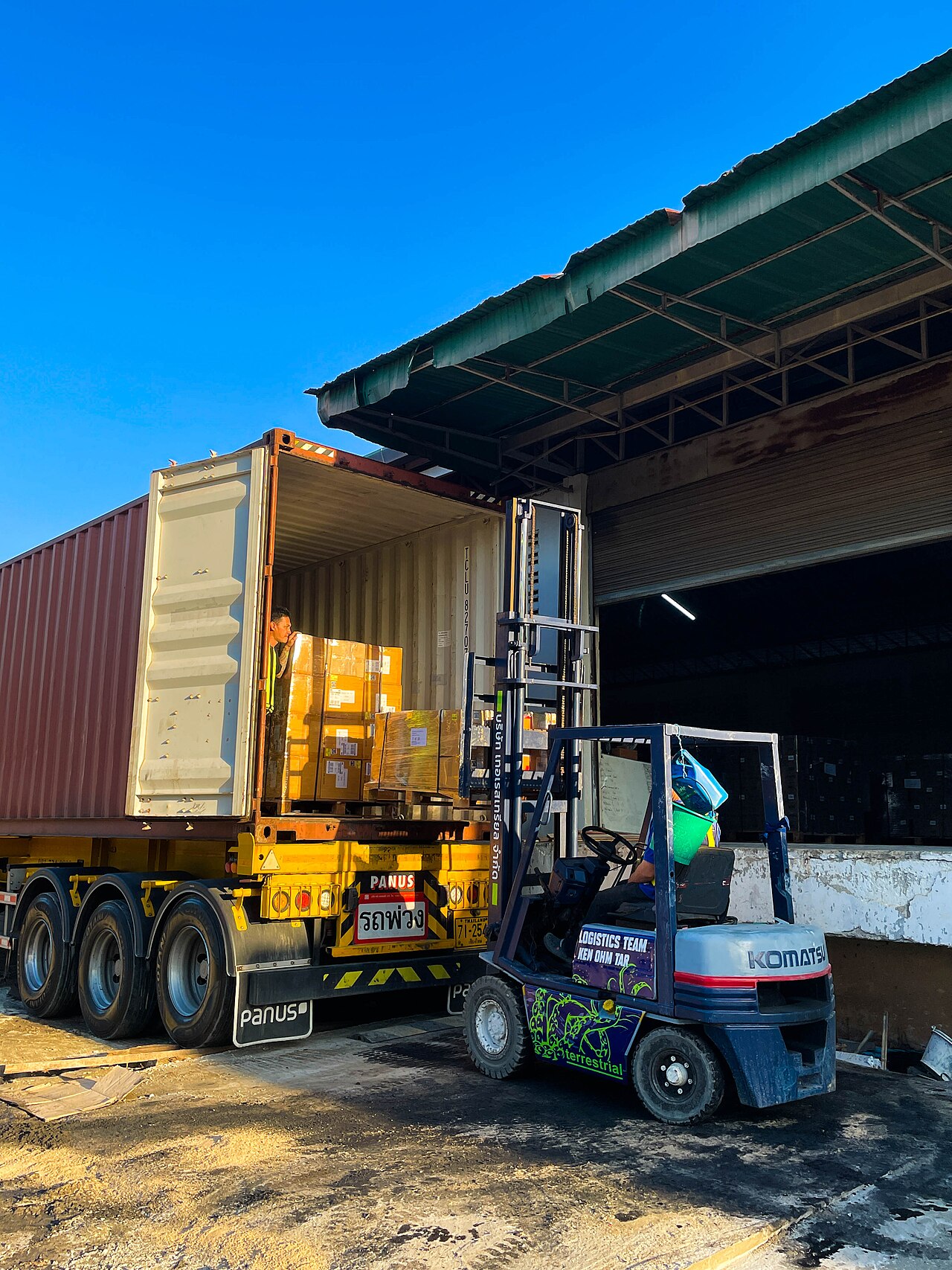
Distributors rarely order a single model 300 deep. A typical 40HQ leaves our floor with manual chairs as the base, a reclining run beside them, a batch of commode chairs filling the corners, and rollators topping off the last meters. Mixed loading is why published numbers are ranges and why every serious factory quote says "calculated per order." When you plan a mixed container, start from the bulky carts — reclining, bariatric, electric — then let flat-pack SKUs (commode chairs, shower chairs, walkers) absorb the remaining cubic meters, because their slim cartons fit gaps nothing else can. If you are evaluating how a factory organizes production and packing generally, our wheelchair factory audit checklist covers the questions that separate engineered loading plans from estimates.
Battery-Equipped Chairs: One Extra Check
Power and electric folding chairs ship by sea with lithium batteries under the same UN38.3 framework that governs all lithium battery transport. For air freight the battery rules tighten, including state-of-charge limits; the documents and what to request from a supplier are covered in our battery compliance guide for electric wheelchair buyers. From a loading standpoint the only difference is density: battery models pack one per carton in protective foam, so expect power-chair numbers (290-330 per 40HQ), not manual-chair numbers.
Five Things to Send for an Accurate Loading Plan
- Model list with quantities — exact SKUs, not categories
- Carton preference — floor-loaded or palletized (pallets occupy carton space and pallet grids pack less tightly, so the unit count drops)
- Destination port and routing — inland legs can cap carton height
- Mixing rules — whether SKUs may share a box or need full-carton integrity
- Target ship window — the loading plan is finalized against the final packing list
A supplier that answers with a per-model carton drawing and a container plan is a supplier that actually packs containers. One that replies with a round "about 300" for every model is reading from the same generic guide you just stopped reading.
Frequently Asked Questions
Why do different suppliers quote different numbers for the same chair?
Carton design differs factory to factory — two "standard manual wheelchairs" can pack into 0.17 and 0.24 CBM cartons, a 40% difference that flows straight into the count. Mixed-SKU orders shift it further. Run the carton math above on each quote and the honest numbers reveal themselves.
When is a 20ft container the right choice?
Small first orders and market tests. A 20GP holds, for example, roughly 115 of our lightweight aluminum wheelchairs or 128 electric folding chairs. Per-unit freight is higher than a 40HQ, but the total outlay is lower while you validate a market.
Do these numbers include pallets?
No — the figures assume floor-loaded cartons, which is how most wheelchair orders ship. Palletizing adds handling safety at destination but reduces the unit count, so it is a per-order decision, not a default.
40ft standard or high cube?
High cube, for wheelchair freight. The extra ~8.7 CBM is 116 bedside-commode cartons theoretical — call it roughly 95 more chairs at planning density. For light, bulky goods the high cube is almost always the better choice.
Can electric and manual chairs share one container?
Yes, and they often do. The battery documentation is handled once per shipment regardless of how many battery models are inside, so mixing costs nothing in paperwork — only the loading plan changes.
How do I work out how many fit without the factory's number?
Carton length × width × height in meters gives CBM per unit. Divide 76.4 (40HQ) or 33.2 (20GP) by that figure for the theoretical ceiling, then take 80-85% for real loading. A 0.13 CBM carton gives ~583 theoretical and ~460-500 planned.