Wheelchair Factory Audit: A Buyer's Checklist
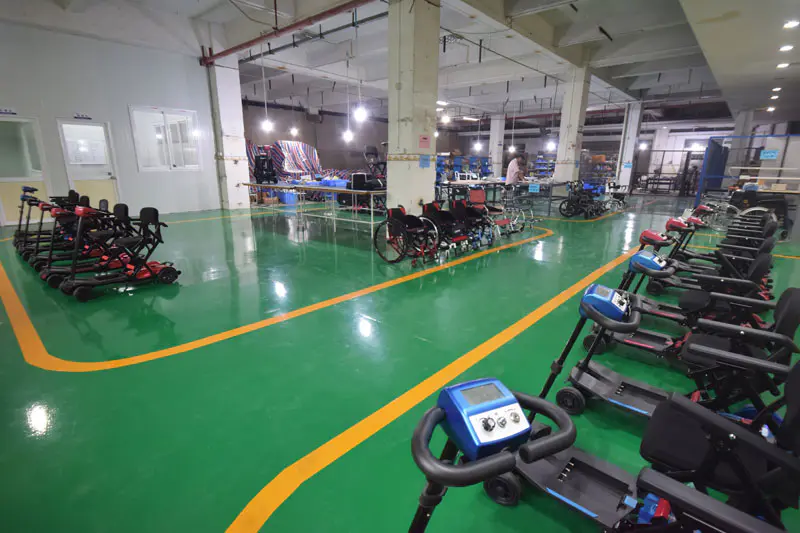
Most wheelchair quality problems are decided months before the container ships - in a welding jig, a phosphate tank, or a torque wrench that nobody calibrated. Certificates arrive as PDFs; they cannot show you any of this. A one-day factory audit, done right, tells you more than any document folder. This is the checklist we hand to buyers who visit our own Foshan factory, written from the factory side so you know exactly what to look at and what answer should sound like.
Before the visit: two database checks that catch fake certificates
Do two things before you book flights. First, verify the CE certificate in EUDAMED, the European database on medical devices - a genuine CE certificate for a medical device names its notified body and registration there, and checking the database directly takes minutes while catching the fabricated PDFs that still circulate in this trade. Second, ask whether the factory operates under an ISO 13485 quality management system - it is the medical-device QMS standard, and a factory certified to it has documented design controls, batch traceability and corrective-action processes that a plain ISO 9001 factory does not. Neither check replaces the visit; both decide whether the visit is worth making.
Frame shop: jigs, not skills
A wheelchair frame is only as consistent as the jig that held it during welding. Walk into the frame shop and look for a dedicated welding jig per frame size, tagged and maintained - not a universal bench with clamps that get repositioned by feel. Ask how often finished frames are measured against a master sample, and ask to see the measurement record. Look at tube ends: punched or laser-cut holes are clean and repeatable; hand-drilled holes wander. Finally, count the welders' fixtures - a factory producing 200,000+ units a year on two jigs is telling you something.
Coating line: the phosphate tank matters more than the oven
Powder coating quality is decided by surface preparation. Look for a phosphating or blasting stage before the powder booth - coating over unprepared steel is how wheelchairs rust at the weld seams in their first year. Ask how coating thickness is measured (a gauge on the line, or 'we trust the oven'), and whether salt-spray testing is done in-house or contracted out, then ask to see the latest report. A proper line answers all three without hesitation.
Upholstery: patterns, flame certificates, stitch counts
In-house upholstery is a genuine advantage for OEM programs - it means your color and logo decisions do not queue behind another factory's schedule. Inside the workshop, check whether cushion panels are cut against patterns or by eye, ask for the flame-retardancy certificate on the fabric (a standing requirement in most care-home and tender specifications), and ask what stitch density standard the sewing line works to. None of this is exotic; all of it separates a workshop from a corner with two sewing machines.
Assembly: the road test and the failed-unit question
Every wheelchair should be function-tested before packing: folding mechanism cycled repeatedly, brakes checked under load, castors spun and aligned, frame flex checked. Ask what the standard test covers, how it is recorded, and - the question that reveals the most - what happens to a unit that fails. A factory with a working quality system has a repair-and-retest flow and can show you the bench where it happens. A pause followed by 'very rare' is an answer too.
Documentation: the export half of quality
Half the quality that matters happens on paper. Pull and photograph: the CE technical file index for the model family you are buying (confirm the model is named inside it), fatigue and salt-spray test reports, upholstery flame-retardancy certificates, and - for electric models - the battery MSDS and UN38.3 test summary. Then run a traceability drill: pick any finished wheelchair and ask the factory to trace it back to its component batches. ISO 13485 factories do this in minutes.
Warehouse, packing, and the repair corner
Any factory presents well on the guided route. Ask instead for three unglamorous stops. The warehouse - are export orders and domestic stock segregated, and is FIFO in use? The packing area - carton quality, label accuracy against the packing list, and whether drop-test records exist for the carton design. And the repair or returns corner, if one exists: what comes back, and why. A factory that shows you its returns openly is a factory that has nothing to hide.
Sample orders: the cheapest audit of all
A sample order audits everything this checklist covers - without a flight. Order two or three units of the exact model you plan to stock, receive them, then interrogate them: measure the frame against the spec sheet, cycle the folding mechanism two hundred times, weigh the chair (does it match the claimed net weight?), check stitch density and weld finish, and drop the packed carton once from pallet height. Then send the units to a local testing lab if your market requires it. A factory confident in its lines sells samples cheerfully and at a fair price; one that resists sample orders has told you something important. Keep the sampled units as master references - when the container arrives, compare units against your own master, not against the catalog.
Red flags we would walk away from
Some findings should end the conversation rather than open a negotiation. A certificate whose notified body number does not resolve in EUDAMED. A 'no visitors' policy on production areas - with video or photos standing in for the tour. Prices significantly below the market range with no explanation of where the cost was taken (usually material thickness or coating prep). Spec sheets whose numbers never appear in any test report. And the classic: a sales team that agrees to every request instantly, including contradictory ones. Factories are allowed to have constraints; factories without constraints are hiding them.
No budget for a flight? Audit by video
A structured two-hour video call beats a certificate folder every time. Agree the route in advance - frame shop, coating, upholstery, assembly, warehouse - and require live walking, not a filmed tour. Ask for on-the-spot zoom-ins: a jig tag, a thickness gauge reading, a carton label next to the packing list. Factories that cooperate smoothly with a video audit almost always cooperate smoothly with your orders; the ones that resist have told you something before you spent a dollar.
We welcome audits at our Foshan factory, in person or by video call - bring this checklist and hold us to it line by line. If you want the short version to work from, our factory page shows the lines this article walks through, and our team will schedule a live walk-through within a week of your inquiry.
One last framing that helps: an audit is not a hunt for a perfect factory - none exists. It is a calibration of risk. You are deciding which weaknesses you can live with (an old paint line, a small upholstery team) and which you cannot (no traceability, no failed-unit flow, certificate gaps). Walk the floor with that lens, write down what you saw against this checklist, and your first container order becomes a decision instead of a bet.