OEM vs ODM Wheelchairs: Process, Timeline, MOQ
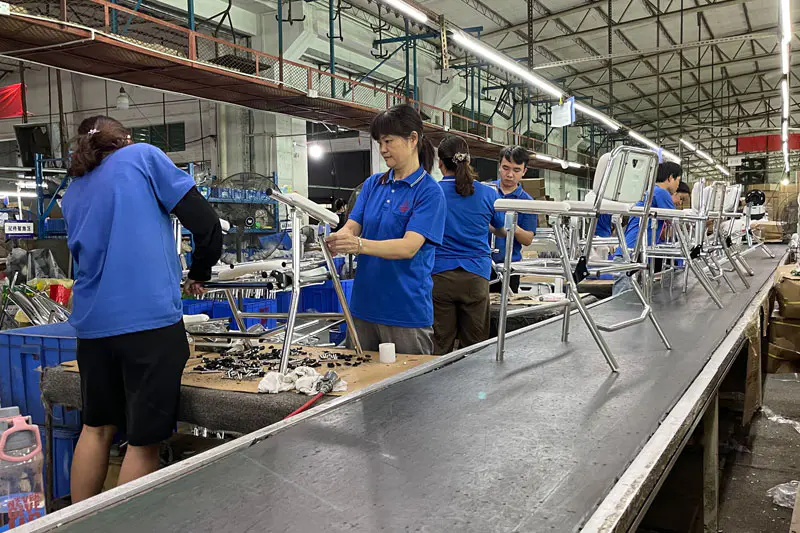
The first thing to know about OEM and ODM is that the industry uses the two terms inconsistently - some suppliers call putting your logo on a stock model 'OEM', others call it 'private label' and reserve OEM for full custom engineering. Before comparing quotations from different factories, agree on definitions, or you will compare prices for different things. In this article, OEM means your branding on our proven wheelchair models, and ODM means engineering a new configuration to your specification. Here is what each path actually involves, how long it takes, and where programs stall.
OEM: your brand on proven frames
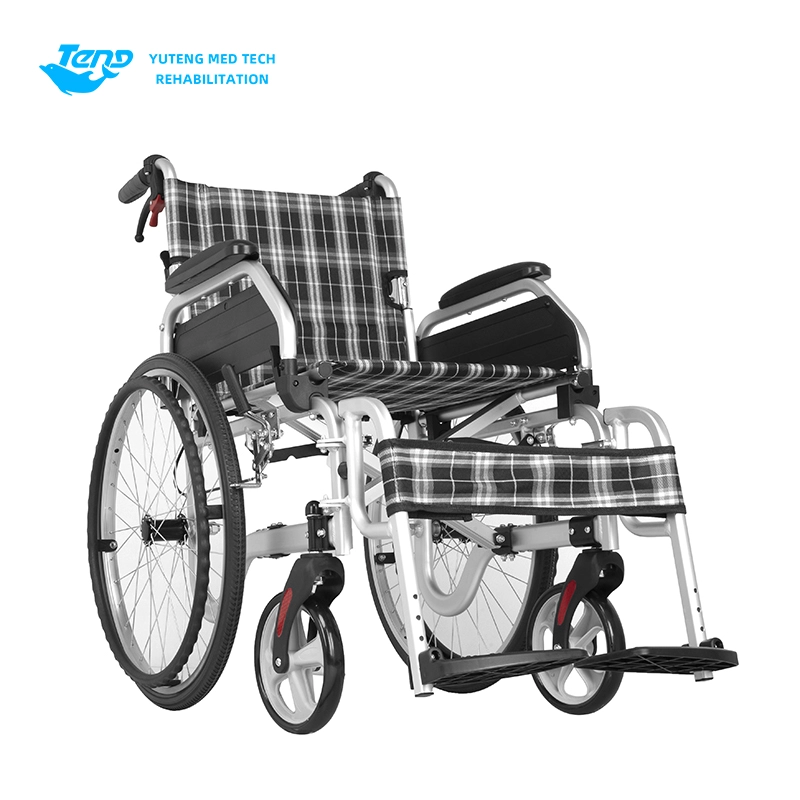
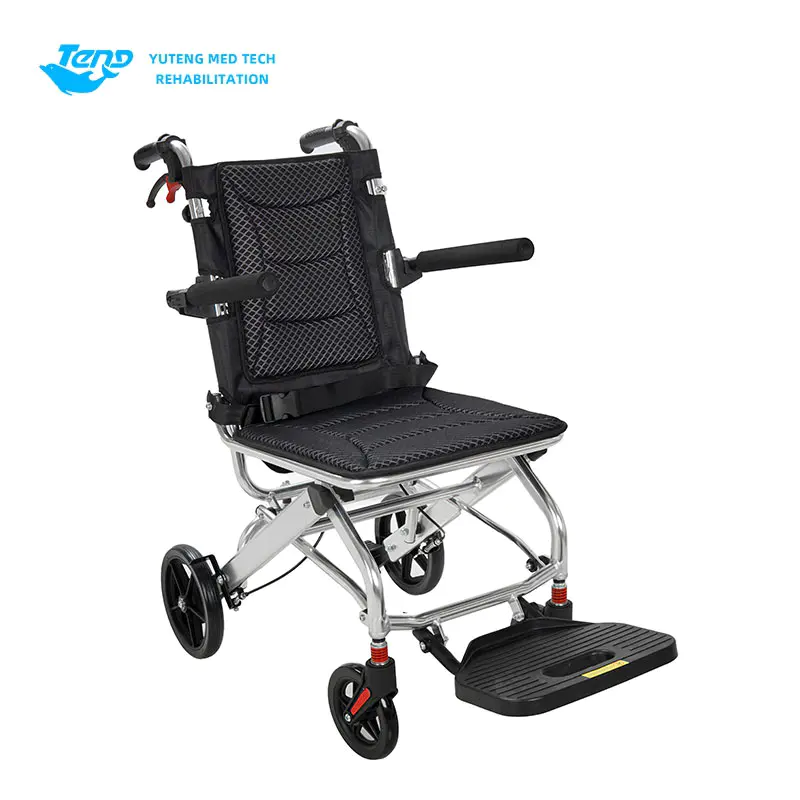
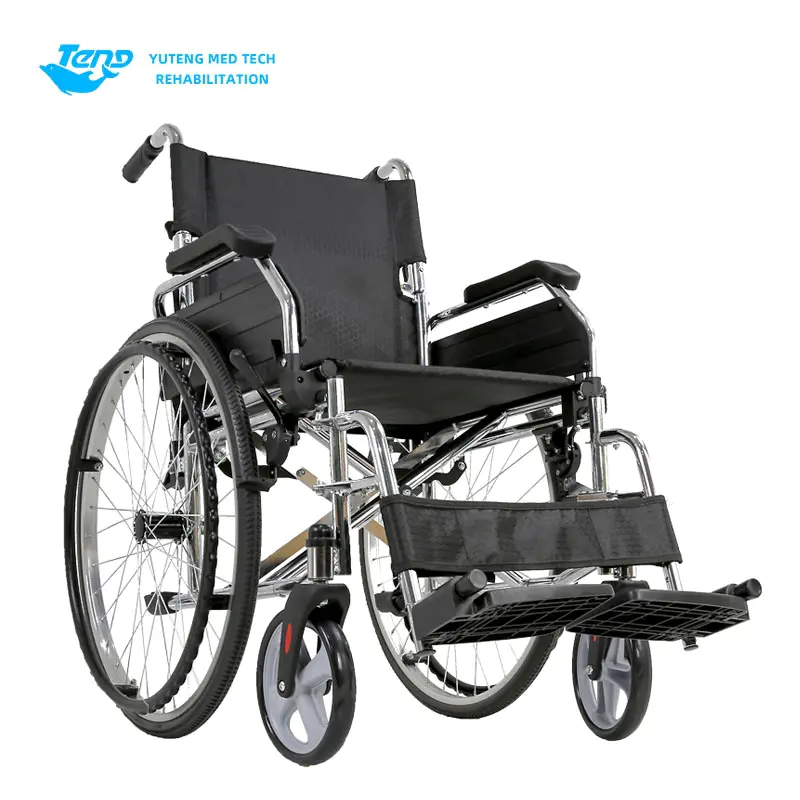
OEM with us covers five customization layers on an existing model. Identity: your logo embroidered on the upholstery or screen-printed on the frame. Color: upholstery from our fabric stock at low volumes, custom-dyed at container volumes; powder-coated frames matched to your RAL reference. Packaging: cartons printed to your artwork. Manuals: your brand on the user manual, with your service contacts - worth more to end users than the logo. Configuration: wheel, armrest and footrest options from the model's existing option list. The frames and mechanisms stay our proven designs, which is exactly why OEM carries no engineering risk: the model you brand is the model other buyers are already running.
The OEM process, step by step
A clean OEM program runs in five steps. Quotation - you send the model list, branding elements and target market; we return itemized pricing including the branding setup cost. Artwork - you supply vector logos and print-ready packaging files. Pre-production sample - one unit with your logo, color and packaging for sign-off; this is the step that protects both sides, so treat it seriously. Production - standard lead time runs from order confirmation. Documentation - if your market requires CE or FDA files under your brand name, the technical file update happens here, in parallel with production. Start collecting artwork while the quotation is being prepared - artwork is the most common critical-path item, and it is entirely on the buyer's side.
ODM: your specification, our engineering
ODM starts when the answer to 'can we modify this?' goes beyond the option list: a different seat geometry, a new folding mechanism, a heavier-duty axle line, or a model that does not exist yet. Our engineering team works from your drawings, a marked-up competitor unit, or a written modification list against one of our platforms. The deliverable is a pre-production sample built with production tooling, not a hand-made prototype - so what you approve is what ships. Timeline: 30-45 days from approved drawings to pre-production sample. New welding jigs or cutting dies are quoted separately and amortize over the program; for a serious second-order intention, tooling folded into unit price is negotiable.
MOQ: what is real and what is negotiable
MOQ questions deserve honest answers, so here is ours. Standard catalog models: no fixed MOQ - sample orders and containers are both welcome, because samples are how serious programs start. OEM branding layers (logo, color, packaging): low MOQs per program, a few dozen units per configuration, because the setup cost amortizes against the program total rather than the unit. ODM: the tooling economics decide - a new jig program needs volume to amortize, and we will show you the arithmetic rather than quote a mystery number. Any factory that quotes a single universal MOQ for every request is simplifying something that is not simple; ask what MOQ applies to your exact configuration.
Where programs stall - three places, 80% of delays
Artwork. Vector logos, print-ready carton files, manual translations - collecting them reliably takes buyers longer than production takes us. Start the folder on day one. Sample approval. Decide internally who signs off and against what criteria before the sample ships; a sample that bounces between three opinions for six weeks costs a season. Compliance updates. CE technical files under your brand name, FDA registrations, battery documents for electric models - all take longer than the production run, and all go faster when mentioned at quotation instead of at shipping. None of these three is technical. All three are process discipline.
Brand and territory protection: ask the direct question
The unspoken fear behind every OEM inquiry is: will you sell my brand's design to my competitor next quarter? Ask the question directly and evaluate how specific the answer is. Our policy is one distributor, one territory, no cross-selling of your branded configuration - in writing, in the program agreement. Whatever factory you work with, get the equivalent commitment in writing before the artwork is shared, not after.
White label vs private label: cutting through the vocabulary
While we are fixing definitions: white label usually means generic products you rebrand without any input - the factory decides everything, you stick a label on. Private label usually means the factory's product with your branding, somewhere between the two. The vocabulary matters less than the question behind it: who decides what, and who owns what? Before signing anything, get written answers to four questions. Who owns the tooling if we stop ordering? Can you sell this exact configuration to another buyer in my market? What happens to my branded packaging stock if we pause the program? And who controls the technical file if my brand name is on it? The answers - specific or vague - tell you what kind of supplier you are talking to, regardless of which acronym they use.
Pricing structure: what OEM actually changes
Buyers sometimes expect OEM pricing to be dramatically different from catalog pricing. In practice the base unit price barely moves - the branding layers carry their own costs. Logo embroidery is a per-unit cost plus a one-time digitizing fee. Custom upholstery colors mean minimum fabric runs per color. Printed cartons have plate costs amortized over the print run. The honest way to evaluate an OEM quotation is to ask for the same model quoted twice - catalog spec and your spec - with the branding deltas itemized. If a supplier will not show the deltas, you cannot tell whether the program is priced fairly, and neither can the next factory you compare against.
Sequencing: OEM first, ODM when the data supports it
The progression that works for most distributors: start with catalog models to learn the market, add OEM branding once volumes justify the setup costs (usually by the second or third container), and move to ODM only when your own sales data shows what the market asks for that the catalog does not offer. An ODM project launched on intuition fails differently from one launched on reorder data - the first bets on taste, the second bets on evidence. Your supplier's engineering team should be pushing back on weak ODM briefs; if nobody questions the specification, nobody has thought about it either.
What to prepare before you ask for an OEM quote
Three things get you a real quotation in 48 hours instead of a round of follow-ups: the model list you want branded (browse the catalog and mark it up), your branding assets (vector logo, RAL or Pantone references, packaging plan), and your market's compliance requirements. If you are weighing a deeper ODM step, send the modification list against a base model - our OEM/ODM page shows the cooperation structure, and the engineering team answers specification questions directly, not through a sales filter.