How to Read a Wheelchair Spec Sheet Like a Buyer
A wheelchair spec sheet carries fifteen or so numbers, and a buyer who reads all of them equally will miss the three that decide the margin. Users read spec sheets to imagine sitting in the chair; you should read them to predict freight cost, warehouse space, return rates and service calls. We write these tables every day - here is how we wish every buyer would read ours, number by number, with the questions each one should trigger.
Seat width: the assortment number
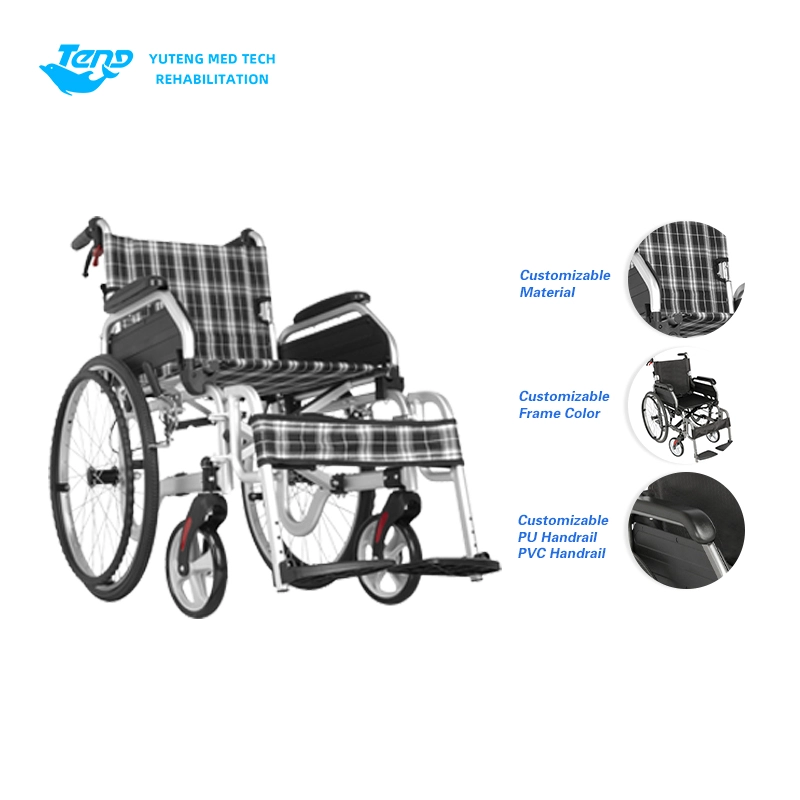
Seat width - typically 40 to 51cm (16 to 20 inches) for adult chairs - is first and foremost an assortment decision. Nearly every market concentrates on two or three widths; stocking the full range ties up capital without adding sales. Which widths concentrate varies by region, which is why the right source is your own order and return history, not the catalog's default. Two related numbers deserve the same attention: seat depth, because a chair that is width-right but depth-wrong generates pressure complaints and returns, and backrest height, because it decides whether the chair serves a lunch-outing user or an all-day sitter. When a factory offers custom seat sizes - ours does, every model is built to specification - the widths you choose become a competitive weapon rather than a constraint.
Folded size and net weight: the freight numbers
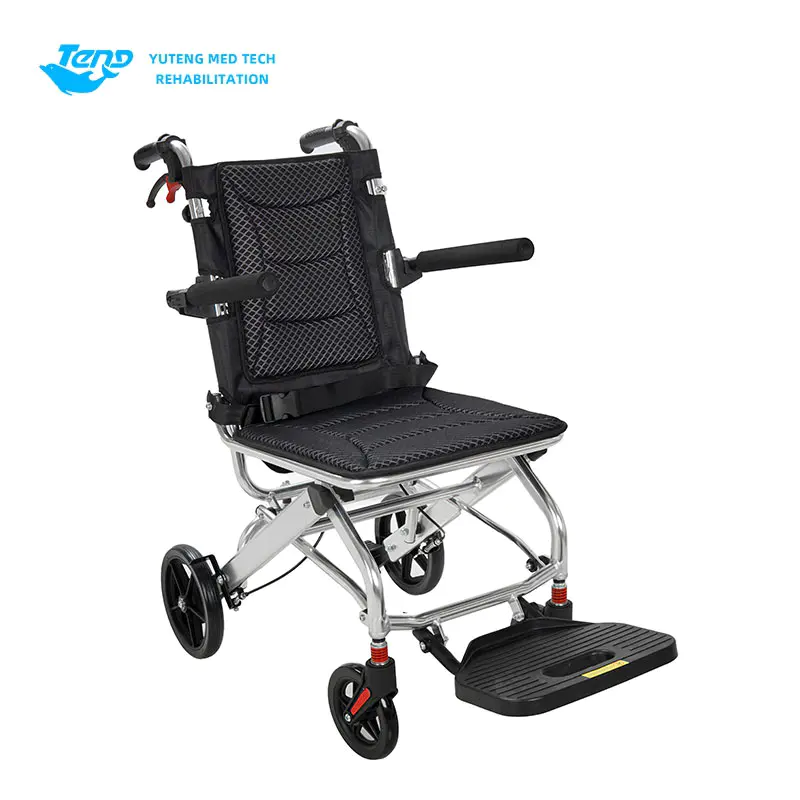
Folded state (say, 27cm wide) decides how many units fit a container, and freight is usually the second-largest line on your landed cost after the goods themselves. The arithmetic is unforgiving: a three-centimeter difference in fold-flat width can move a 20-foot container from 150 to 170 units, which can be the difference between quoting your dealers a viable price and not. Net weight pulls in the same direction and adds a second effect - it is the number retail customers ask about first for folding chairs, because someone has to lift the chair into a car. Aluminum frames under 10kg and carbon fiber frames under 9kg command their prices for exactly this reason. When you compare two models, compare folded volume and weight against their prices together, never separately.
Wheel diameters: the terrain and mismatch number
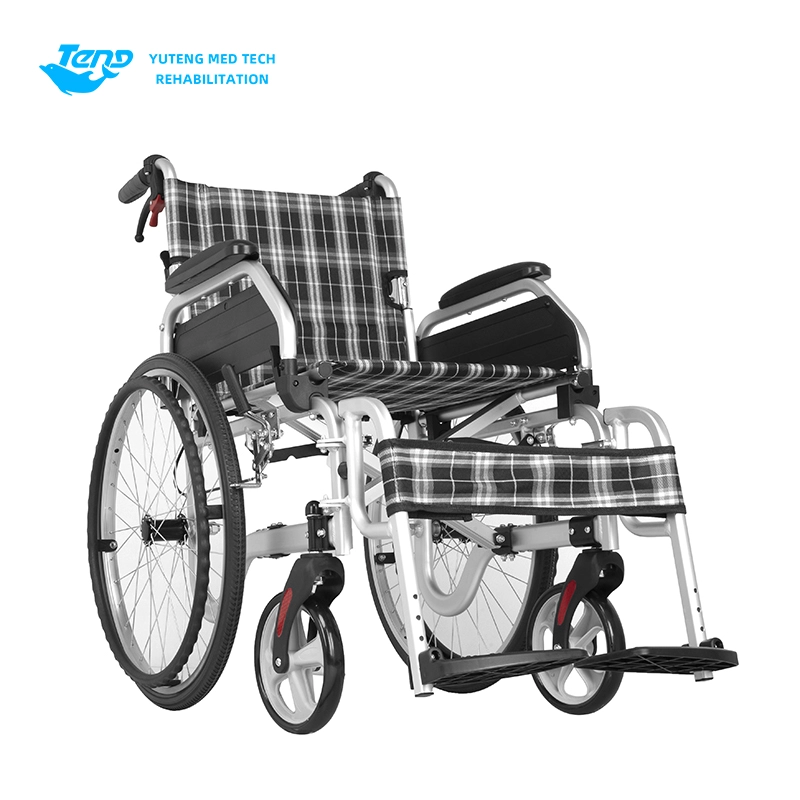
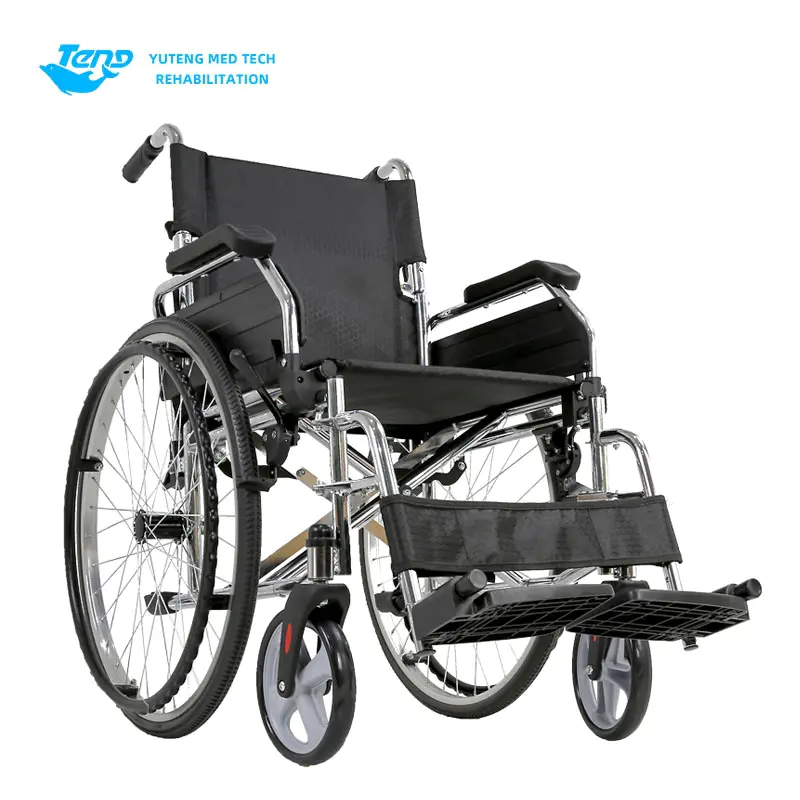
Rear wheel diameter tells you what the chair is for. Large rear wheels (51-60cm on our self-propelled models) mean the user propels - outdoors, up kerbs, independently. Small wheels throughout mean an attendant pushes - clinics, airports, indoors. Selling a transit chair to a self-propelling user is the most common mismatch return in the trade, and it is visible in the spec sheet before purchase. Front castor size (typically 6 to 8 inches) predicts threshold and pavement behavior: bigger castors roll over cracks and kerb cuts that stop smaller ones. Match the wheel configuration to your buyers' actual pavement, not to the lowest price.
Weight capacity: the compliance number
User capacity - 100kg on standard models, up to 300kg on bariatric - is the number your market's regulator and your insurance will ask about. Two things make the number real rather than nominal: the test standard behind it (a fatigue test report showing cycles at rated load, not just a label) and whether the frame is structurally reinforced or merely rated. Bariatric programs live or die on this paperwork, and so does your liability cover when a care home buys through you. Ask for the report; a serious factory produces it without offense.
Frame material: the total-cost number
The material line - steel, aluminum alloy, carbon fiber - is really a total-cost line. Steel buys strength at the lowest price and pays for it in weight (freight, and the user's daily lifting). Aluminum alloy is the volume sweet spot: light enough for daily handling, strong enough for institutional abuse. Carbon fiber serves the premium end where every gram has a price - air travel, one-arm lifting, weak caregivers. The material also predicts repair economics: steel welds anywhere, aluminum needs proper TIG work, carbon needs a specialist. Buy the material your service reality can support.
Seat height and bed-compatibility: the overlooked pair
Two numbers rarely printed prominently but decisive in care settings. Seat-to-floor height decides whether the user can push up from the armrests to stand - the transfer that determines whether the chair actually reduces caregiver workload - and whether the chair tucks under dining tables. And for nursing-home programs, check the chair's footprint against bed heights and hoist clearances. Chairs bought for institutional fleets without these two checks generate 'nothing wrong with it, send it back' returns - the most expensive kind, because the product did exactly what it said.
Options and accessories: the configuration trap
Spec sheets list options - elevating legrests, detachable armrests, anti-tippers, headrests, oxygen holders. The buyer's discipline is to stock options that match documented market habits, not the full matrix. Each option multiplies inventory lines and forecast complexity; a chair ordered with an option your market never requests is shelf space with a serial number. Ask the factory which options are actually ordered most often on that model - pattern data from a factory shipping 300,000 units a year is better market research than guessing - and build the range from that.
Opening dimensions: the packing number nobody reads
Carton dimensions and packing quantity per container appear at the bottom of the sheet, and buyers skip them - then discover their landed cost. Ask three things: units per 20-foot container with this exact carton design, whether cartons ship flat-packed or assembled, and whether the carton is retail-ready (barcodes, color print, handle holes) or standard brown. The same wheelchair in a better carton can sell 15% higher at retail; the same wheelchair in an oversized carton can cost you a full pallet of lost container space. Freight and packaging are not afterthoughts to the spec sheet - they are its last two rows and your first two margin decisions.
The numbers that are mostly marketing
Three claims deserve professional skepticism. Unqualified 'lightweight' - lightweight compared to what? Ask for the kilogram figure. 'Premium bearings' with no brand or spec behind them - ask what is actually fitted. And 'maximum load' stated without a test reference - ask whether it is a fatigue-tested rating or an arithmetic one. None of these questions is hostile; buyers who ask them get better products, and factories that answer them precisely are the ones worth shortlisting. If a number will appear in your own marketing, get the document behind it first.
From spec sheet to order: three questions per model
Compress everything above into the three questions we ask distributors to bring to a quotation. One: which seat widths does my market concentrate on, and does this model cover them? Two: what does the folded size and weight do to my landed cost per unit - and to my customer's daily handling? Three: which numbers from this sheet will I print in my own marketing, and can the factory document each one? A model that answers all three well belongs in the container. Our product pages carry the full specification tables our QC line tests against - start with the manual wheelchair or the three-wheel rollator, and if a number raises a question, send it to our engineers before you order, not after.